
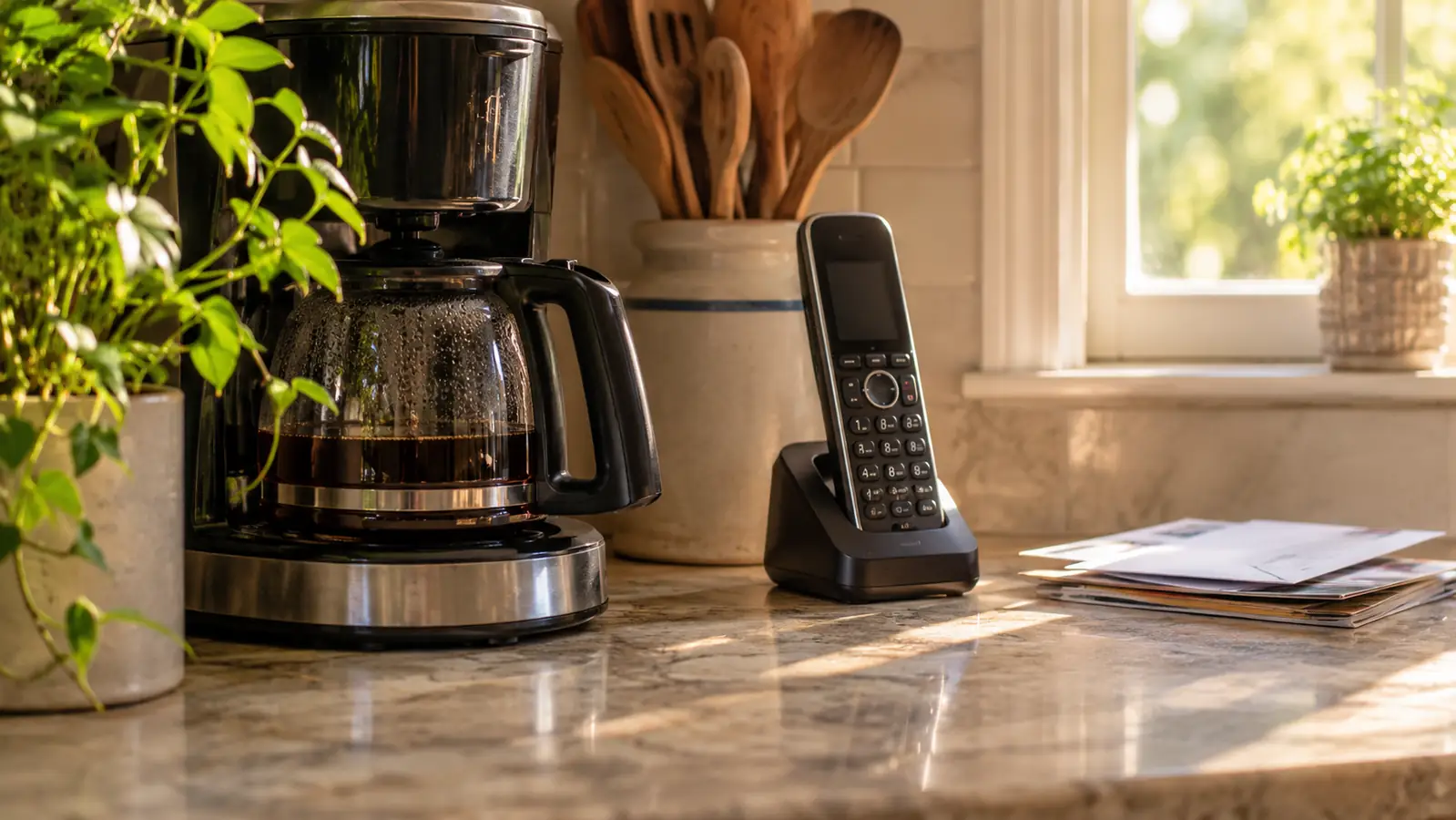
I bought the VTech amplified cordless phone in January 2025 because my husband Walt had stopped answering the landline. He is 75, a retired machinist, and his hearing has been sliding for about six years. He does not wear hearing aids yet and he is not planning to. So the phone had to do the work the aids were not doing, and I had already bought and returned one amplifier that turned out to be a plastic cup you hold over the receiver, which lasted four days before it went into the drawer.
Here is what I want to be clear about up front. This is not a review written from a spec sheet. It is the account of a woman who has walked past this phone on her kitchen counter every single day since winter, who has watched a 75-year-old man decide whether a ringing phone was worth standing up for, and who keeps a drawer of rejected gadgets to prove she is not easily impressed by a box. If you are a grown child or a grandchild doing the shopping, I would rather hand you the parts the product page leaves out.
The Quick Verdict
The volume boost and the loud ringer are real, not marketing. The call blocking and the setup will need a family member's help, and that is the honest catch.
Amazon Check Today's Price →If the problem is that he cannot hear them on the line, start here
This is the phone that got Walt answering again. Base in the kitchen, second handset in the den, one evening of setup. That is the whole trick.
Amazon See It on Amazon →How I've Used It
The base went on the kitchen counter, next to the coffee maker and the digital frame our daughter gave us. The second handset went into the den, on the side table next to Walt's recliner, and that second handset is the single most useful decision we made about this phone. He is in the den from about seven in the evening until bedtime. A phone in the kitchen is a phone he has to stand up for, and at 75 with a bad hip, standing up for a ringing phone is a negotiation.
It has been our only landline phone since. My sister Ruth is 68, widowed, lives alone in Harrisburg, and bought one on my say-so in the spring. She uses it mostly the way a person uses a screen door, to see who is there before letting them in. Ruth is the person I would point at this phone first, ahead of anyone with hearing trouble, because she lives alone and the screening changed her evenings more than any volume setting could.
The change I did not expect was behavioral. For most of a year, the old landline would ring and Walt would look at it and not move. Now he picks up. He still complains about the phone, because he complains about all phones, but he answers it. In a house where the grandchildren call on Sunday afternoons, and where the phone had become something we shouted across the room at each other, that is the only measurement I actually care about.
In February we had a stretch of ice, the schools closed, and the grandchildren called four times in one afternoon. That is more than the phone had rung in a month on the old one. Walt took three of those calls standing at the kitchen counter with the boost on and the fourth from the recliner on the den handset, which is the entire reason that second handset exists. I wrote the day on the calendar, which I do not normally do for phone calls.
What Nobody Tells You About the Volume Boost
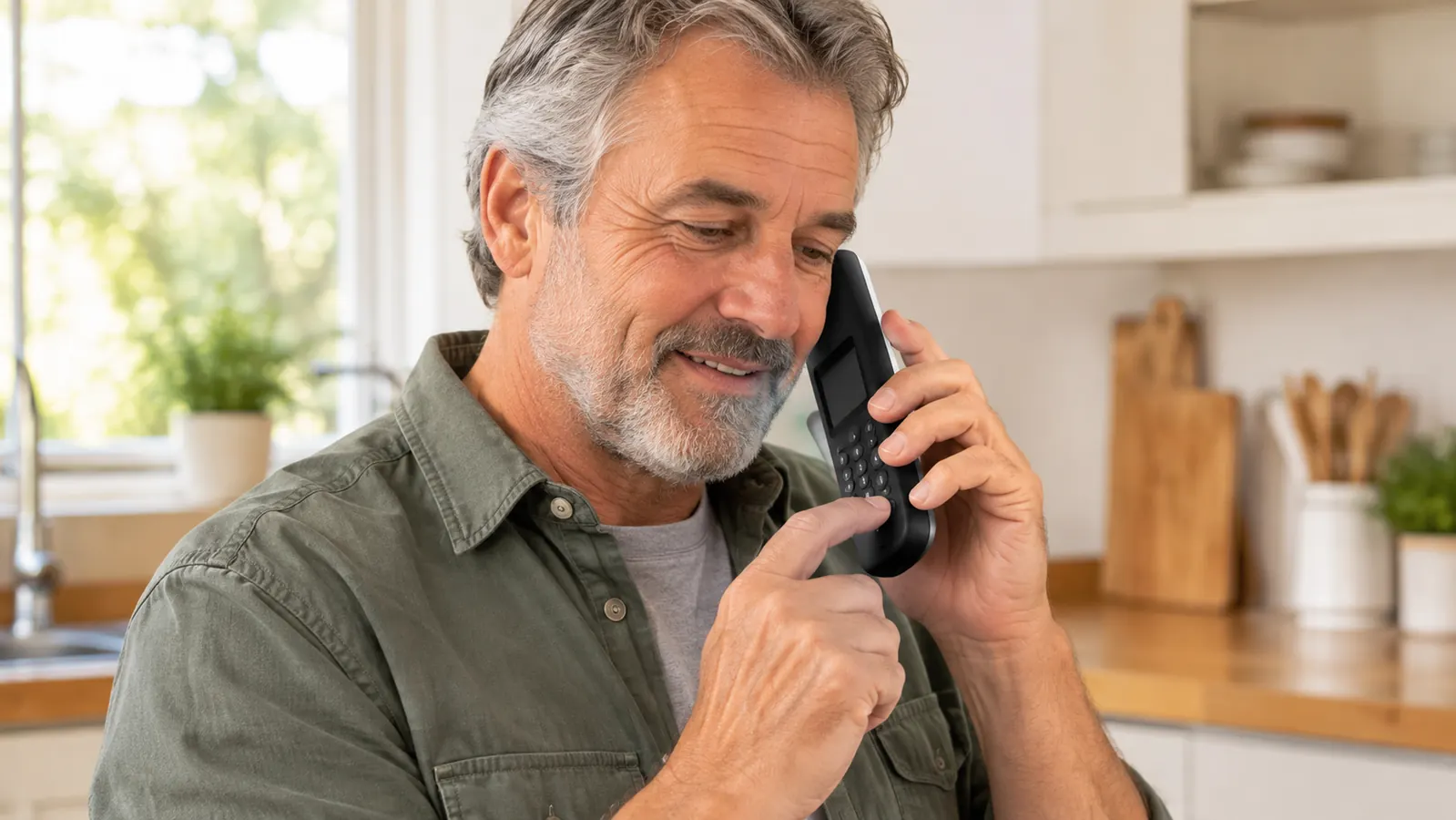
The feature that sold me is called Audio Assist. It is a one-touch boost of up to 50 decibels on the voice coming through the earpiece, and unlike most of what gets printed on a box, this one is true. Walt presses it on every call. He does not ask people to repeat themselves three times the way he did a year ago, and my son has stopped shouting into his phone on Sunday afternoons, which has improved everyone's temper.
What the listing does not spell out is that the boost amplifies the whole line, not just the person. When my son calls from his truck, the engine gets 50 decibels louder too. Loud and clear are two separate problems. This phone solves the loud one, and it solves it well. If your parent's complaint is that they can hear the voice fine but cannot make out the words, you may be shopping for the wrong device entirely, and no amount of volume will untangle that.
The second thing nobody says is that it is a button, not a permanent setting. Walt has to press it each time he takes a call. He built the habit in about a week, and now his thumb finds it the way it finds the volume on the television, without him thinking about it. A person with memory trouble, or a person brand new to a cordless handset, may never build that habit, and then the best feature on the phone sits unused. That is the difference between this working and this sitting in a drawer next to my plastic amplifier cup.
One more thing worth knowing. The boost lives on the handset, so the handset has to be the thing he is holding. That sounds obvious until you have watched someone set it down on the counter mid-call and then wonder why the voice went quiet again. We went through about two weeks of that before it became automatic, and it only became automatic because he takes enough calls now to practice on.
The Ringer Is Loud, and That Cuts Both Ways
The ringer is rated at 90 decibels and it flashes while it rings. Ninety decibels is roughly a lawn mower from a few feet away. In a two-story brick house, that means Walt hears the phone from the basement, which was exactly the point of buying it.
It also means that a ringer left at maximum on a kitchen counter will wake the whole house at six in the morning. We turned ours down a notch. The flashing indicator stayed on, and for Walt that turned out to be the more useful half of the feature, because light carries across a room differently than sound does once your hearing starts going. He sees the flash before he hears anything.
What a loud ringer will not do is make a quiet caller louder. If your daughter whispers into her phone in a library parking lot, the bell does not help her. The two features have to work together, the loud ring to get the person to the phone and the boost to keep them on it, and no product page explains that, because it is not a feature, it is a sequence.
For a year the landline rang and Walt did not move. He picks up now. In this house, that is the only test that counts.
Call Blocking, the Answering Machine, and the Parts That Get Used
The phone blocks calls and it has a digital answering machine with about 22 minutes of recording time. I did not expect to care about either one. I use both every week, and the answering machine has quietly become the most-used thing in our kitchen after the coffee maker.
Blocking takes feeding. You block a number after it rings, which is how we did it, standing in the kitchen while a recorded voice kept talking about my vehicle's extended warranty. Three weeks of that and the house went quiet. The nuisance calls that used to arrive at dinner mostly stopped, and I have not missed one of them.
There is a right way and a wrong way to feed that list, and we did it the wrong way first. I stood at the counter and blocked numbers one at a time as they came in, which took most of January. Over the holidays my grandson sat down with the manual and walked me through doing the whole list in one sitting instead. If you are the family member who owns this job, start there and save yourself the month.
The other side of it is that the phone does not know a scammer from your dentist's new office line. We blocked a real call by accident in February and did not notice for two weeks, which means somebody's receptionist thought we were ignoring her. If the person using this phone is not comfortable managing a list, someone in the family should own that job. Otherwise the feature causes the exact problem it was meant to prevent.
The answering machine is the plainest thing on the device and the one Walt trusts most. Twenty-two minutes is more than we will ever need. He checks the messages when he comes in from the garage, the same way he checked the old machine for thirty years, and I have come to think that familiarity is worth more than any feature printed on the box.
Buttons, Display, and Hands That Hurt
Walt has mild arthritis in his hands. When we were shopping, I did not think that mattered as much as his ears. It mattered. The buttons on this handset are oversized and the display is large and backlit, which means he dials without hunting for his reading glasses first. I wear bifocals and I can read the caller's name from across the counter.
The backlight matters more at night than I expected. Walt gets up once or twice and does not turn on the kitchen light, and he can read the caller's name in the dark before he decides whether to pick up. On the old phone he squinted at it and gave up. Small thing. It is also why he now ignores the pharmacy's recorded reminder instead of answering it and getting confused.
The base measures 8.46 by 7.28 by 4.72 inches and the whole unit weighs about a pound and a half. On a counter, that is roughly a small loaf pan. Not tiny. If your parent has a narrow kitchen or a wall phone they have used since the nineties, measure the space before you order, because this will not hang where the old one hung and it will not fit in a slot built for a different shape.
One honest caveat. Bigger buttons help with aim. They do not necessarily help with force, and a person with genuinely weak hands may still find the press firm. Walt does not, and his hands were half the reason we bought it, so for us it was right. For a parent with advanced arthritis, I would have them hold a handset in a store before you spend the money, because this is the one thing I could not judge for him.

Setup, Batteries, and the Extra Handset
Setup took one evening, most of which was me reading the manual out loud while Walt told me to just plug it in. The battery is included, and the listing gives five days of standby, which matches what we see. The den handset sits in its cradle most of the week and has never died on us in the middle of a call.
If the house is large, or if your parent spends the day in one room while the base is in another, buy the extra handset when you buy the phone. This VTech base is compatible with the SN5307 and SN5107 handsets. We put the second one in the den, and that one decision is the reason the phone gets answered instead of walked past.
Check one thing before ordering. It is a cordless system, but it is not a cordless base. The base needs an outlet, so decide where it will live and whether there is power there. That sounds obvious. It is also the reason an earlier phone upgrade of ours spent a week on the kitchen floor waiting for an extension cord.
What I Liked
- Audio Assist boosts the incoming voice by up to 50 decibels, and the difference is immediate, not subtle
- 90 decibel ringer with a flashing indicator, loud enough and bright enough to reach another floor
- Oversized buttons and a large backlit display work without reading glasses
- Call blocking cut our nuisance calls to almost nothing within three weeks
- Extra handsets (SN5307, SN5107) let you cover a second room without a second base
Where It Falls Short
- The volume boost amplifies line noise and background along with the voice
- Blocking a number by mistake is easy, and we did not notice for two weeks
- The base is 8.46 by 7.28 inches, which is real counter space in a small kitchen
- Setup is one evening, not five minutes, for a person who is not tech comfortable
- It will not help someone who simply refuses to learn a new routine
Who This Is For
This is for a parent or grandparent whose hearing has slipped and who still wants a phone in the house, preferably one that looks and behaves like the phone they have always had. It is for the person on the other end of a bad line, the one who is tired of repeating themselves twice per call. And it is for a household where a grown child is willing to spend one evening setting it up and one month managing a block list.
It is also, honestly, for a widowed aunt or a sister living alone. Less because of the volume and more because of the screening. Ruth will tell you this VTech did not change her hearing. It changed her evenings, and she would say that is the better trade.
Who Should Skip It
Skip it if the problem is not volume. If your mother hears fine and simply does not answer, a louder phone will not fix that, and if she has moved entirely to a cell phone in her pocket, this becomes furniture with a cord attached. Skip it too if your parent's hearing is bad enough that they cannot follow a conversation even at full boost, because that is a hearing aid conversation, not a phone conversation.
Skip it if nobody in the family will do the setup and the blocking. And skip it if the person you are buying for has refused every new device for a decade. I say that with affection. Walt nearly refused this one, and the only reason he did not is that I plugged it in and handed him the handset without asking permission first.
What I'd Tell You at My Kitchen Table
Buy it for the ears and the hands, not for the bells. Put the base where the person already sits, add the second handset if there is a second room, and plan to spend one evening being patient. Then leave it alone and let them get used to it, because the habit takes about a week and no amount of explaining shortens that.
Ours has been on the counter since January and it will stay there. That is not a rave. It is the truth about a small appliance that quietly fixed the thing it was supposed to fix, and in a kitchen full of gadgets that did not, I will take it.
The one kitchen upgrade that finally got answered in our house
Base on the counter, second handset in the den, one evening of setup and a month of blocking numbers. If hearing on the line is the problem, this is where I would start.
Amazon Check Availability on Amazon →