
Walt answered the phone, listened for about four seconds, and handed it to me without a word. That was the routine through the fall of 2024. His hearing has faded in both ears, he is not ready to talk about hearing aids, and on the old handset he caught every third word and then passed the phone across the kitchen like a plate he did not want. By December I had stopped expecting him to take a call at all.
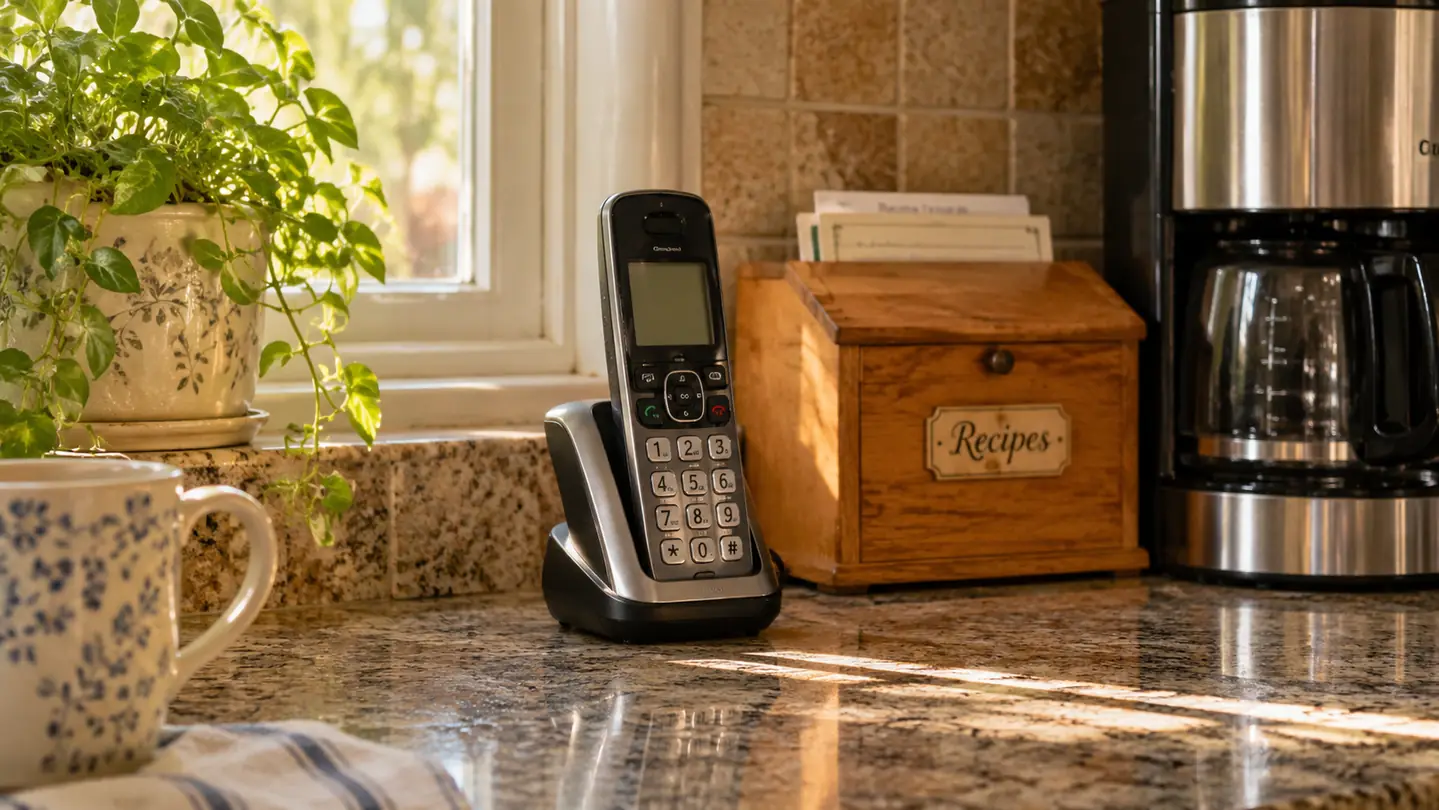
In January 2025 I bought the VTech Amplified Cordless Senior Phone with the answering machine and the call blocking. I ordered it on a Sunday afternoon after working through a few hundred of the 4,137 reviews on the listing, most of them written by women my age or by their daughters. It came that week. The base went on the kitchen counter by the recipe box, and the extra handset went on the end table beside Walt's recliner in the den. He has answered the phone himself almost every day since. That is the whole review in one sentence, but there is more worth knowing before you buy one for your own house.
The Quick Verdict
The one-touch volume boost is the reason to buy it, and it is the reason Walt answers the phone again. The menu is fussier than it should be and the boost lifts the hiss on a bad line along with the voice, but nothing else we looked at came close.
Amazon Check Today's Price →He stopped handing me the phone. That was the entire point.
The VTech cordless system with the 90dB ringer, the flashing ring indicator, and one-touch Audio Assist. Two settings I assumed were sales talk until Walt started using both of them every day.
Amazon Check Today's Price on Amazon →How I've Used It
Setup took one evening, and most of that was me being careful. Our grandson walked me through it on a video call, and the handsets found the base without any fuss. The manual is thin and the print is small, which is a funny thing for a phone built for people with small-print problems, but you will only read it once. Caller ID came up on the first incoming call, the date and time were already right, and I have not opened the booklet since February.
The first week I put it through the sort of testing I used to do on a new set of encyclopedias. I had Walt call Ruth from the den handset while I stood at the kitchen base, and then I had him take it down to the basement where he keeps his tools and call me from there. Both calls came through. I did not measure a distance in feet and I am not going to pretend I did, but a two-story brick house with a basement has not dropped a call yet, and the handset found the base again the moment he set it back on the cradle.
The base sits on the kitchen counter between the coffee maker and the recipe box. The second handset lives on the end table in the den where Walt watches the news. I put it back on its cradle every morning when I make the coffee, the way I used to wind the clock, and neither handset has run out of charge in the middle of a call. The listing says five days of standby, and I believe it, because mine sat off the base through a long weekend without a peep.
Walt uses it differently than I do. He keeps Audio Assist turned up for the whole call and brings it down only when our son rings from the truck and the background noise gets to be too much. I use the boost mainly for Ruth, my sister in Harrisburg, who has a soft voice and a habit of holding the receiver too far from her mouth. On a good line she sounds like she is sitting at the table with me. There is also a three-way calling feature our son used at Christmas to have both of us on the line at once. It worked. We will likely never use it again, but it is there.
What the Volume Boost Actually Does
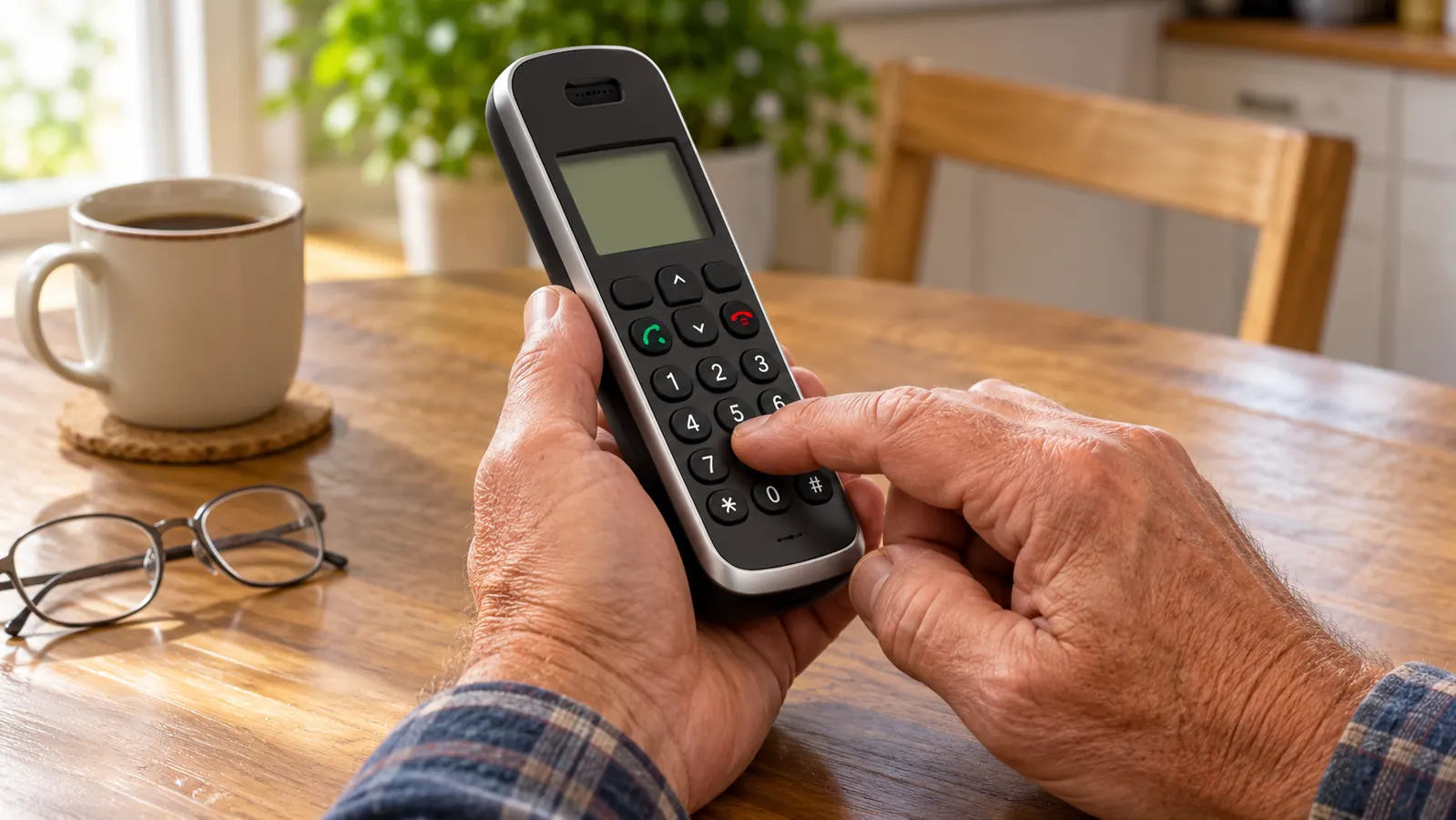
The listing calls it 50dB Audio Assist, and I will admit I did not know what that number meant before we owned one. What it means in our kitchen is this: one press of the button makes the person on the other end noticeably, immediately louder, and it does it while they are still talking, so you are not asking anyone to repeat themselves while you fiddle with a dial.
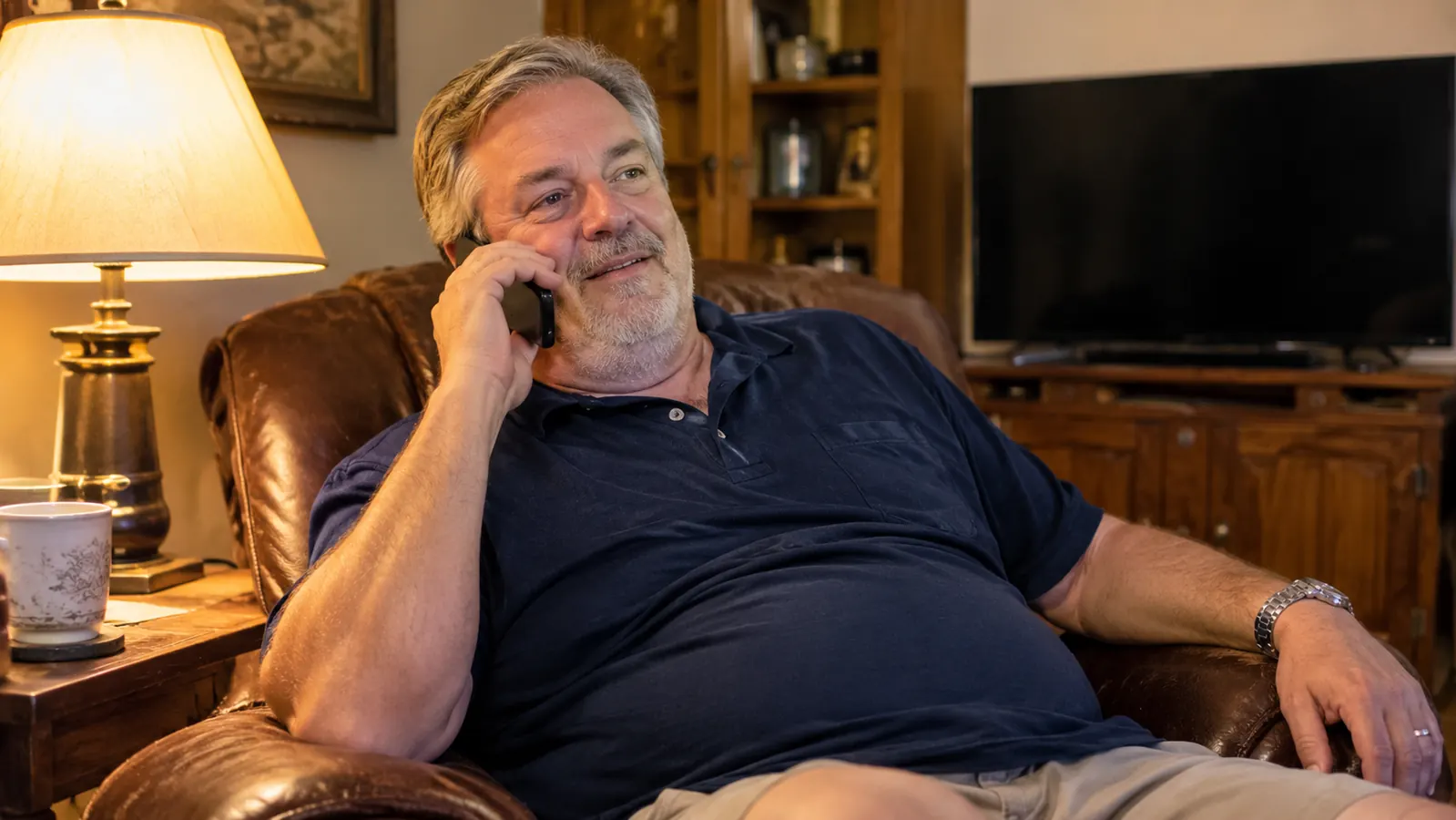
For Walt the difference is not subtle. Before, a call from our daughter meant a lot of nodding and a lot of me repeating things back afterward. Now he takes the call in the den with the door shut and tells me about it when he comes out. He still misses a word here and there, and he still turns the television off before he answers, but he is in the conversation now instead of standing next to it.
Here is the honest part. The boost does not know the difference between a voice and a hiss. On a poor connection, or when someone is calling from a parking lot, it lifts the static right along with the person, and turning it up makes a bad line worse. It is also not a hearing aid and it will not become one. If your husband's hearing is where Walt's is, this will help a great deal. If it is worse than that, it will help less, and I would say so plainly to anyone who asked me.
The Ringer, the Buttons, and the Display
The ringer is rated at 90dB, and there is a flashing indicator on the handset that goes off when it rings. We keep the volume at about halfway. At full volume it made me jump from the next room. Halfway is plenty for a two-story brick house, and the flashing light is what does the work in the evening when the television is going in the den.
I changed the ring volume exactly once, in January, and I have not touched it since. It took me and that thin booklet an embarrassing twenty minutes to work out how, and I would not care to do it again in a hurry. Once it was set, it was set. Now, when the phone rings at half past six and the news is on in the den, the handset lights up as well as rings, and Walt sees it before he hears it. That light has done more for us than the extra volume has.
The buttons are the other thing that sold me. Walt has arthritis in his hands and he has fat-fingered more phone keypads than I can count. These are large, they are easy to see, and the display is big enough and bright enough that he reads the caller ID without going to find his reading glasses. The display is backlit too, so at night you are not squinting at a dark screen.
His right thumb has a knuckle that stopped bending properly sometime in his sixties. On the old handset, dialing Ruth's number took him two or three tries and usually ended in a wrong number, and Ruth would ring back to ask who had been breathing at her. He has not dialed a wrong number since March, that I know of. The keys are spaced so he can find one without bending that thumb, and the numbers are printed large enough that I can read them from across the counter without my bifocals, which is more than I can say for the remote control.
What I do not love is the menu. Changing a setting or clearing the message counter takes four or five presses through choices that are not always where I expect them, and I have started over more than once. Walt has not tried. He answers, he talks, he hangs up, and if he needs anything else he waits for me. That is fine for him and it may be fine for your parent, but it is worth knowing that the big buttons are the easy part and the small decisions are not.
Walt took a call from our daughter in February, talked for six minutes with the door shut, and came out and told me what she said. He had not done that in a year.
The Answering Machine and the Robocalls
The machine holds 22 minutes of messages, which sounds like a great deal and is, for us. I clear it on Sunday afternoons and have never come close to filling it. Recording the outgoing greeting took me three tries, mostly because I kept laughing at the sound of my own voice, and Walt refused to do it at all, so it is my voice on the machine and will stay that way.
The call blocking has changed our evenings more than I expected it to. We were getting four or five robocalls a week about warranties and Medicare and something concerning a car we do not own. Now I block each number as it comes in, and the phone does not ring for that number again. Our worst stretch was a Tuesday in February when the machine took six calls before noon, five of them recorded silence and one a recorded voice telling me my car's warranty had expired. I blocked that number. The following week the same recorded voice came at us from a different one. That is the nature of the thing.
So I will say plainly what the blocking does and does not do. It is one number at a time, and the callers do rotate through new ones, so it is a chore that never quite ends. What it does is thin them out until dinner is quiet again, and that has been enough for us. Walt has stopped flinching when the phone rings at six o'clock.
The messages play back clearly, and the volume boost works on them as well, which matters more than you would think. Walt checks the machine before he checks the mail now, and he has opinions about who leaves a decent message and who does not.
How It Has Held Up
We are coming up on a year of daily use and nothing has broken. The handsets have been set down hard on a hardwood floor more than once, the buttons still register every press, and the battery still holds a charge through a weekend away from its cradle. Eleven months in, the VTech has not given us a single problem I could point to. For the current price of a piece of ordinary house equipment, that is about what I expect and no less.
What I notice now is what I have stopped noticing. I do not think about the phone anymore. It rings, one of us answers it, and the call happens. For something that is supposed to disappear into a kitchen counter, that is the highest compliment I can pay it.
What It Doesn't Do
It will not fix a bad line and it will not take the place of a hearing aid. Those are the two limits worth saying out loud. If your mother's hearing keeps sliding, this phone buys you comfortable conversations and time, not a permanent answer.
It also does not do any of the things a smartphone does, and I do not hold that against it. Walt has a flip-style phone of his own for when he is out of the house. This is the phone that sits in the kitchen and does one job well. Between the two of us we have enough screens.
And it does need to sit in its charging cradle now and then, which sounds obvious until you live with a man who leaves a handset in the den for three days. We solved that by giving the den handset its own spot on the end table, and the morning routine takes care of the rest.
What I Liked
- One-touch volume boost that Walt actually uses on every call
- 90dB ringer with a flashing indicator, loud enough to hear from the back of the house
- Big buttons and a large backlit display he can read without going for his glasses
- Call blocking cut the dinner-time robocalls down to almost nothing
- 22 minutes of message recording, more than a normal week requires
- A three-way call actually worked when our son tried it at Christmas
- Eleven months in, nothing has broken
Where It Falls Short
- The menu takes more presses than it should, and I still mis-press and start over
- The volume boost lifts the hiss along with the voice on a poor line
- Call blocking is one number at a time, and the callers keep changing numbers
- The manual is thin and printed small, which is a poor match for the buyer
- It cannot help someone whose hearing loss has moved past moderate
Who This Is For
It suits a household like ours, where one person has moderate hearing loss and has decided against hearing aids for now, and the other person is tired of translating every conversation. It suits a parent or grandparent who still has a landline and means to keep it. It suits anyone who has quietly stopped answering the phone because answering means a conversation they cannot follow.
It also suits the adult child doing the buying. If you are shopping for a parent who will not ask for help, this is a gift that does not require them to admit anything. It looks like a phone. It sits where the old phone sat. The only thing that changes is that they can hear you, and that is the part they will mention to their sister on the telephone.
Who Should Skip It
If your parent's hearing loss is severe, or if they already have hearing aids and wear them, this is not the answer. Walt's hearing is moderate, and the boost meets him where he is. Somebody further along the road will need something more than a louder receiver.
Skip it if the house has gone cell only. This needs a landline service to do anything at all. And skip it if the person you are buying for wants a screen, photographs, and typing instead of talking. My grandchildren would find this phone baffling, and honestly they should. It is not for them. It is for the kitchen counter and the man who answers it now.
One button, and he is back in the conversation.
The VTech amplified cordless phone with the answering machine, the 90dB ringer, and the Audio Assist boost Walt uses on every single call. We have run ours for nearly a year. If your kitchen has a phone that nobody wants to pick up, start here.
Amazon Check Today's Price on Amazon →