
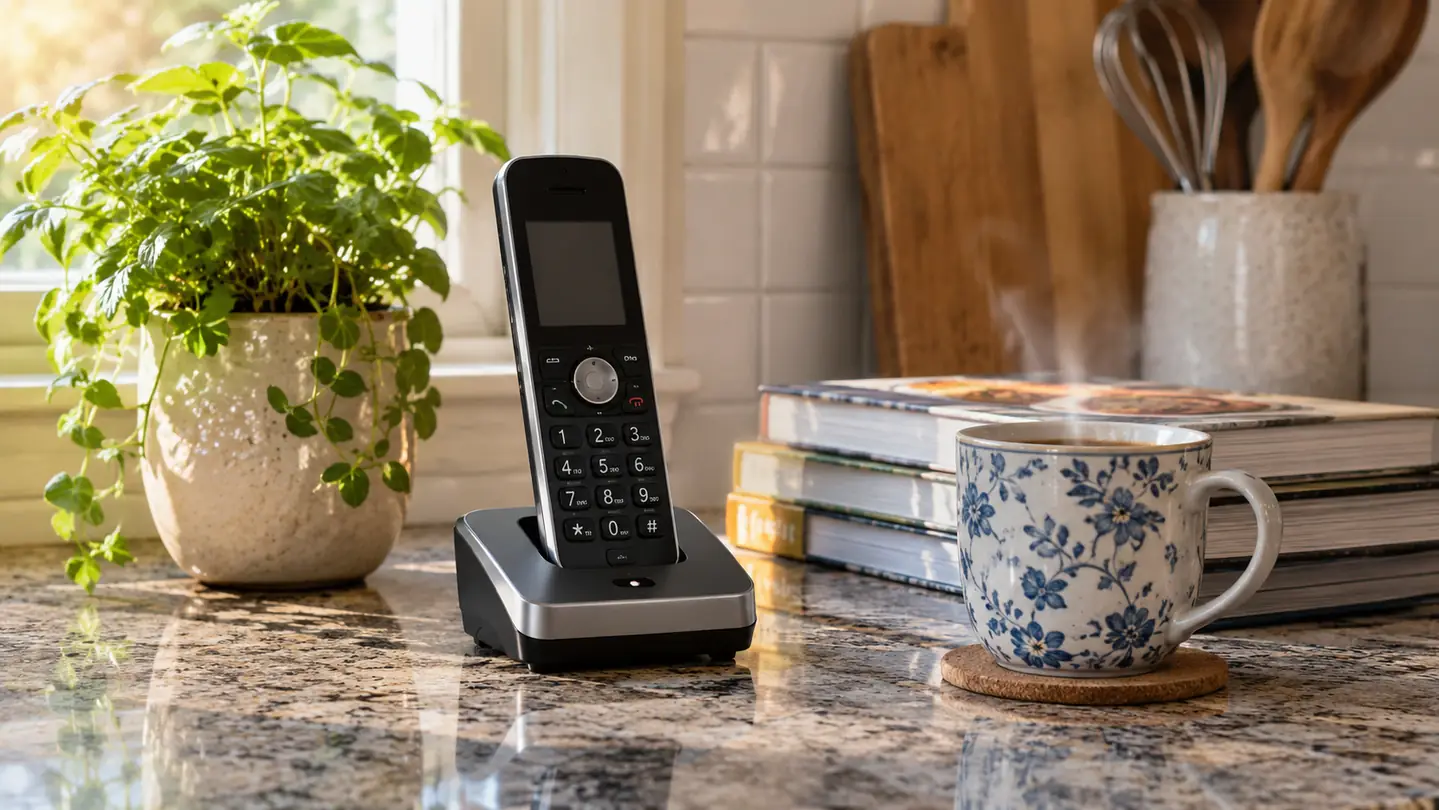
The short answer first, because that is why you clicked. If your grandparent still drives, still leaves the house alone, still sends texts, buy the cell phone and stop reading. If your grandparent mostly takes calls sitting down, struggles on a bad line, and has hands that fumble a small glass rectangle, the amplified cordless phone wins and it is not close. Walt is the second kind. That is why the VTech Amplified Cordless Senior Phone has been on our kitchen counter since January 2025 and his flip phone spends most of its life in the glove box.
I am 72. Walt is 75, a retired machinist, with moderate hearing loss in both ears and no hearing aids yet, plus arthritis in his hands that turns small buttons into a negotiation. I bought the VTech to replace a landline handset he had quietly stopped answering because he could not hear it ring from the den. This is not a spec sheet read out loud. It is what happened in a two-story brick house in Lancaster, and the places where a plain cell phone would have been the better gift.
| VTech Amplified Cordless Senior Phone | A Regular Cell Phone | |
|---|---|---|
| Hearing help during a call | One touch of Audio Assist adds up to 50dB of gain right on the handset | Whichever volume the phone allows, usually a few small steps |
| Ringer | 90dB extra-loud ringer plus a flashing visual indicator | Loud enough in a pocket, easy to miss from the next room |
| Buttons and screen | Oversized high-contrast buttons and a large backlit display for Caller ID | Small glass keyboard and small type |
| Works away from home | No. The base needs power and a phone line | Yes, anywhere there is signal |
| Photos and texting | Neither | Pictures of the grandchildren arrive in seconds |
| Reaching someone outside the house | Not possible | Call from the roadside or the store |
| Answering machine | Built in, 22 minutes of recording, plays back from the base | Carrier voicemail, which someone else has to set up and teach |
| Nuisance call blocking | Blocks robocalls at the base without a menu | Carrier-level blocking that works across the network |
| Setup | Plug the base into power and the phone line, then charge the handset | Needs an account, a SIM, a passcode and someone to sit with them |
| Best for | A grandparent who takes most calls sitting down at home | A grandparent who is out in the car most days |
How We Ended Up With Both
We did not start with a phone purchase. We started with a flip phone, which our son set up for Walt two years ago. It does what a phone should. It rings in his pocket, it works in the car, and it reaches our daughter in Ohio from the parking lot of the hardware store. For a while that was enough, and I want to be fair to it, because the flip phone is not the villain of this story.
The trouble was inside the house. Walt would be in the den with the television on, the flip phone would be charging on the kitchen counter, and a call from our grandson would go to voicemail. When he did answer, he held it against his ear and asked people to repeat themselves. He never once said the volume was too low. He would just finish the call quickly and hand the phone to me.
So in January 2025 I bought the VTech. The base went on the kitchen counter by the recipe books and a second handset went into the den, which is the whole reason the arrangement works for us. There is a phone in the room where he sits and a phone in the room where I cook, and neither of us has to trot down the hall when it rings. The flip phone stayed in the glove box for the car. That is the arrangement that stuck, and it is the one I would recommend to most families.
Where the VTech Wins
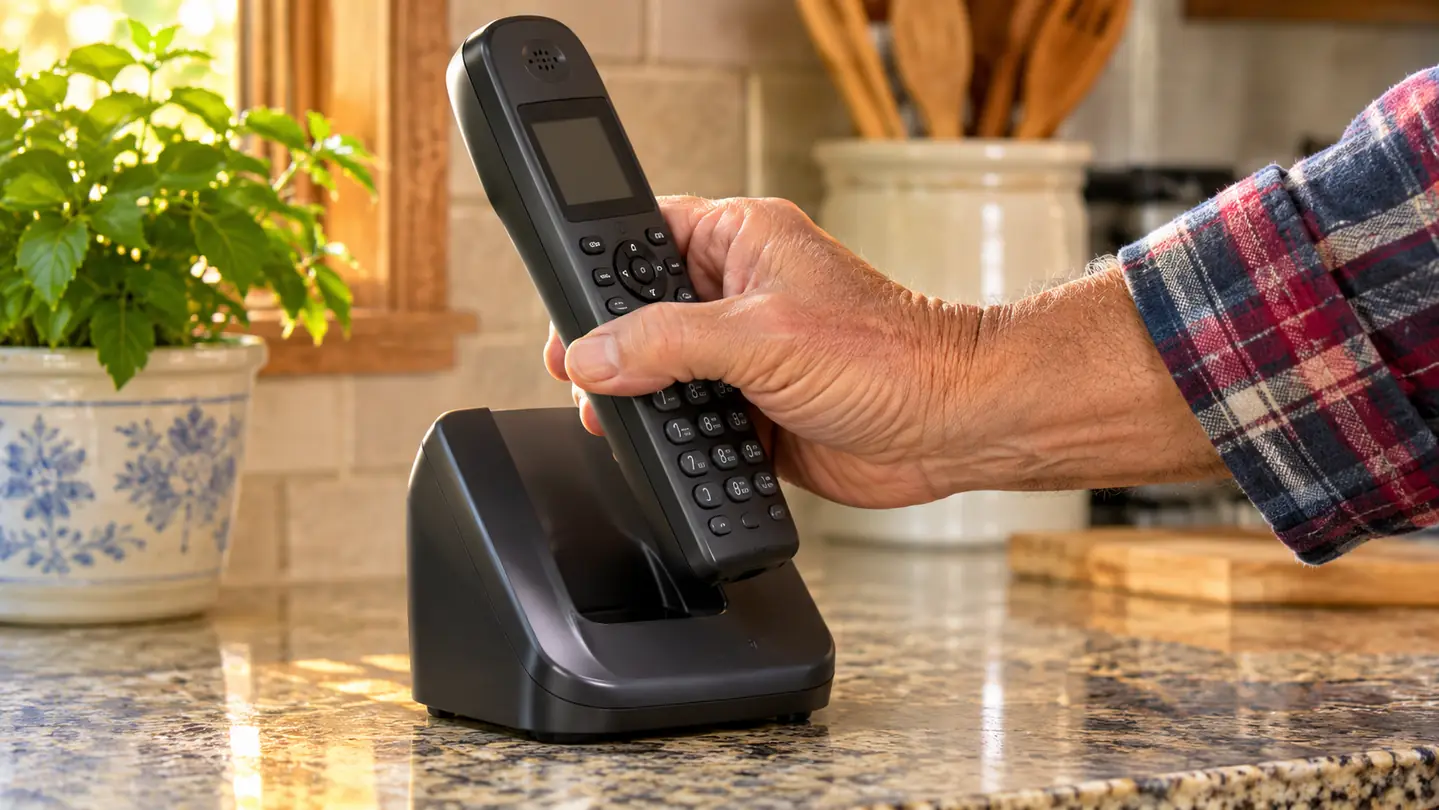
The hearing help is the reason this phone exists and the reason I would buy it again. One touch on the handset engages Audio Assist, which adds up to 50dB of gain, and Walt uses it on every single call. Not on some calls. Every call. He does not have to hunt through a menu, he does not have to hand the phone across the room for me to fix the volume, and he does not have to say out loud that he is struggling. He presses one button and the conversation comes back to a normal volume.
The ringer is the second thing. It is rated at 90dB, which is loud enough to carry from the kitchen into the den with the television going, and there is a flashing visual indicator on the handset as well. That combination matters more than people who hear well realize. Walt's hearing loss is in both ears and it is not evenly spread, so a loud ringer alone is not a guarantee. The flash gives him a second signal that does not depend on his ears at all.
The third is the physical design. The buttons are oversized and high contrast, and the display is large and backlit, which means Caller ID is readable without hunting for reading glasses in the middle of a ring. Walt wears reading glasses and I wear bifocals, and both of us can read that screen from arm's length. The phone also blocks nuisance calls at the base, which matters more every year. Before this, our line rang four or five times a day with a recorded voice about car warranties. Now it mostly does not.
One more thing I did not expect to use and now would miss. The built-in digital answering machine holds 22 minutes of recording, it lives in the phone rather than in a service, and the messages play back from the base with one button. My sister Ruth has carrier voicemail she has never once checked in her life, and after watching that I understand exactly how it happens.
Where a Regular Cell Phone Wins
I am not going to pretend the cell phone loses on every point, because it does not, and anyone who tells you otherwise is selling something. The first place it wins is distance from the house. The cordless handset works around the home, but the base needs power and a phone line, and none of that travels. If your grandparent still drives to the grocery store, still walks the block, still goes to church on Sunday, the phone in the pocket is the one that matters and no amplified handset replaces it.
The second place is photographs. Our daughter sends pictures of the grandchildren to the whole family almost every week, and on a phone Walt can see them. On the VTech he cannot, because it does not do that. It makes calls, it takes messages, it blocks nuisance callers. That is the entire job. For a lot of grandparents the photo of a seven-year-old in a soccer uniform is not a side feature, it is the main reason to own anything with a screen.
The third is reach. A cell phone gets to people a landline never will. Text messages, a group thread with cousins, a quick call when plans change in the parking lot. Walt's flip phone does all of that in its limited way, and he would be worse off without it. If your grandparent is sociable and mobile, the cell phone is not a compromise. It is simply the better tool for the life they are living.
The honest summary is that these two devices solve different problems. One is an instrument for hearing a conversation clearly inside your own house. The other is a small computer that follows you around. Very few people need only one of them, and most of the families I know end up with both, which is exactly what happened here.
The phone that got Walt to stop saying 'say that again'
90dB ringer, one-touch Audio Assist that adds up to 50dB of gain, oversized high-contrast buttons, a large backlit display, and a built-in answering machine with 22 minutes of recording. It has been on our kitchen counter since January 2025.
Amazon Check Today's Price on Amazon →What I Liked
- One-touch Audio Assist adds up to 50dB of gain, so nobody has to hunt through a menu mid-call
- 90dB ringer plus a flashing visual indicator, loud enough to carry from the kitchen into the den
- Oversized high-contrast buttons and a large backlit display for Caller ID
- Built-in digital answering machine with 22 minutes of recording, played back from the base
- Blocks nuisance callers at the base without an app
- The extra handset means a phone in the den as well as the kitchen
Where It Falls Short
- The base needs a phone line and a wall outlet, so the phone does not leave the house
- No texting and no photographs
- Single line, so one conversation at a time and the second handset joins the call
- The handset is not small, and someone who has never used a cordless phone needs a minute with it
Walt uses the volume boost on every single call. Not on some calls. Every call. He presses one button and never has to say out loud that he is struggling.
What the First Month Actually Looked Like
I want to be honest about setup, because this is where gifts go wrong. It took me about twenty minutes and most of that was moving the old base and finding an outlet. The batteries came included, the base plugs into power and into the phone line, and the handset charges in the cradle. That is the whole installation. Our 19-year-old grandson was visiting that weekend and I did not need him, which I want on the record.
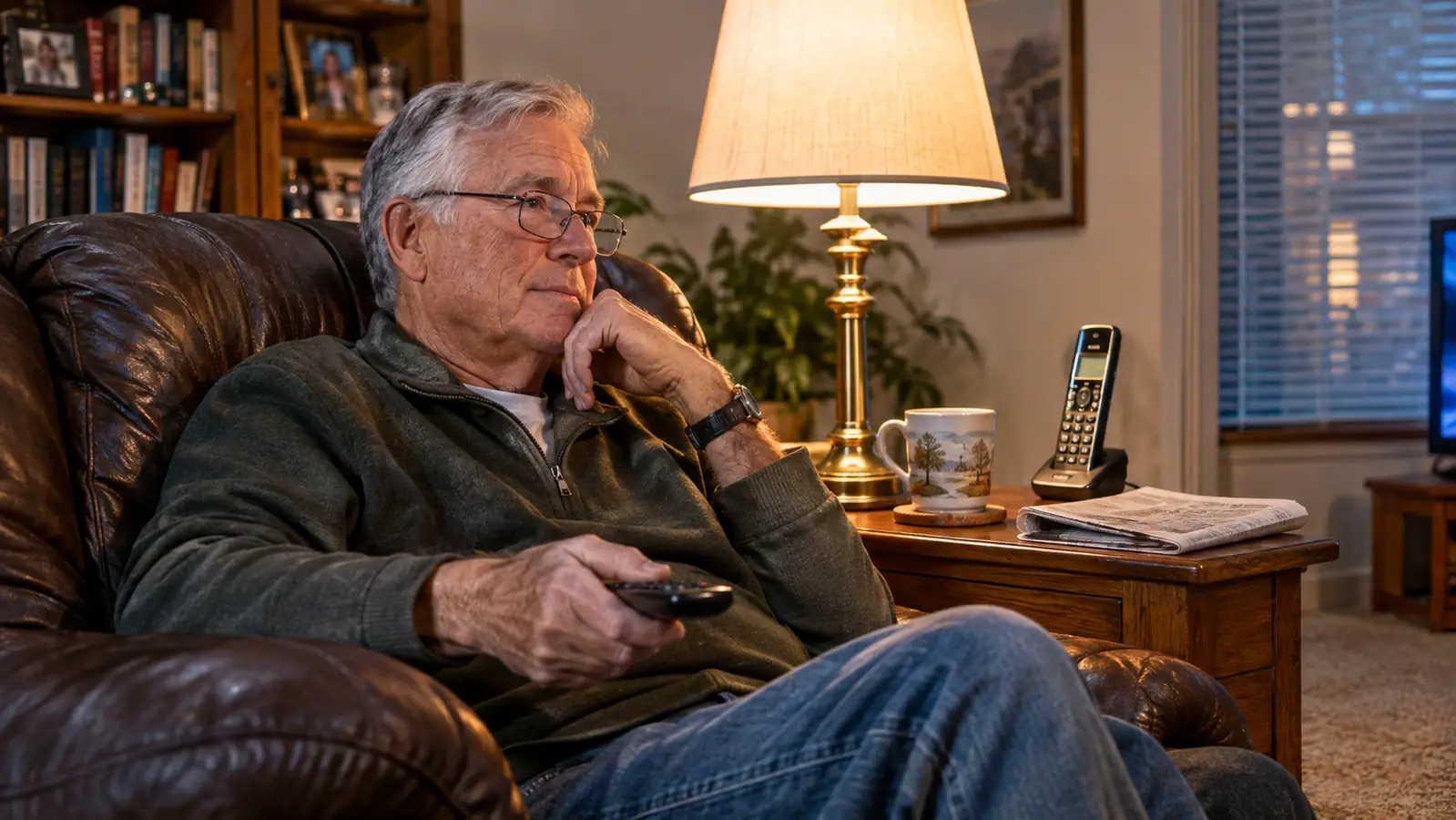
The first week Walt pressed the Audio Assist button so hard I thought he would break it. By the second week he was doing it without looking. By the end of the month he had stopped handing the phone to me, which is the only review metric that matters in this house. He also stopped turning the television up so loud in the evenings, which I did not see coming and have quietly enjoyed.
The base weighs 1.5 pounds and measures 8.46 by 7.28 by 4.72 inches, which is roughly a hardback book lying flat on the counter. It is plastic, it looks like a phone, and no visitor has ever commented on it. Standby time is listed at five days. In practice the handset goes back on the cradle every night out of habit, so we have never tested that limit.
The one thing that took adjusting was the single line. If Walt is on a call in the den and I pick up the kitchen handset to dial out, I am joining his call, not making my own. Two people, one line, and we have learned to check. It also handles a three-way conference call, which we used exactly once, at Christmas, to talk to both children at the same time. That call alone justified the whole thing.
Who Should Buy Which
Buy the VTech if your grandparent takes most calls at home, has any degree of hearing loss, and has hands that struggle with small buttons. Buy it if they have complained even once that they cannot hear people on the phone. Buy it if they live alone. My sister Ruth is 68, widowed, and by herself in Harrisburg, and this is the gift I would send her, because a ringer that loud and an answering machine in the same machine is a safety feature she would never buy for herself.
Buy a regular cell phone instead if your grandparent is out of the house most days, drives, and already texts. Buy it if what they want most is photographs of the grandchildren landing in their hand. Buy it if they are comfortable with menus and small screens, because plenty of people their age are and there is no reason to talk them out of it.
If you cannot decide, do what we did. Keep both. Put the one they use at home on the counter beside the chair where they sit, and leave the other one in the car. The mistake I nearly made was treating this as a choice between two phones. It is a choice about where your grandparent spends their time, and the answer is usually both places.
And one last thing, from someone who has been on the receiving end of a lot of well meant gifts. Do not buy this and hand it over in the box. Set it up, program the numbers they call most, record the outgoing message in your own voice, and then give them a phone that already works. Half the gifts that failed in this family failed at that step, not at the product.
If the calls happen at the kitchen table, this is the phone
Set it up before you wrap it, program the family numbers, and hand over a phone that rings loud enough to hear from the next room. That is the version of this gift that gets used.
Amazon Check Today's Price on Amazon →