
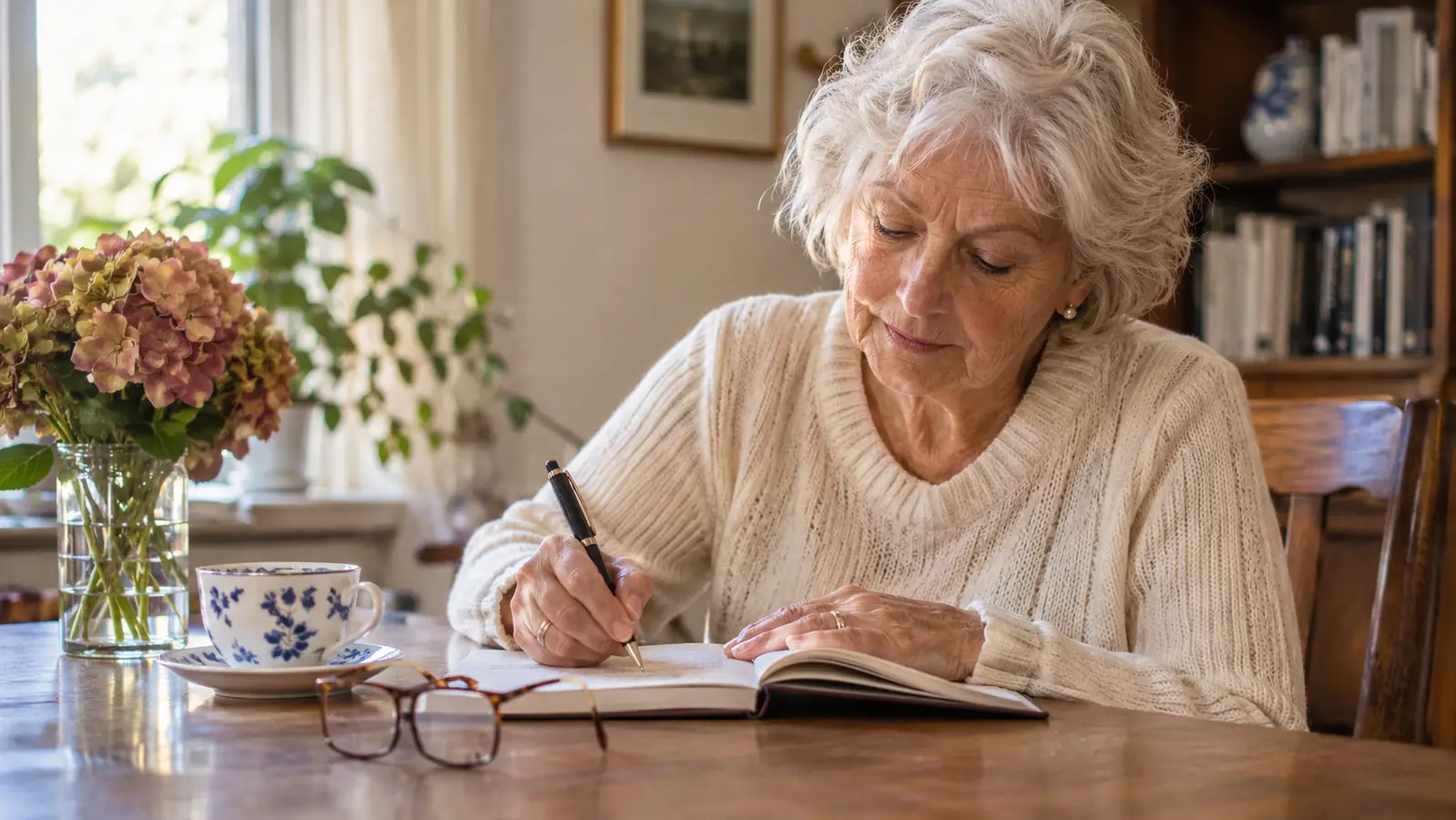
On Mother's Day 2025, my 19-year-old grandson handed me a square package wrapped in the comics section and said, “I want the stories, Grandma.” Inside was Tell Me Your Life Story, Grandma, a guided journal published by Questions About Me. I am 72, a retired elementary school librarian in Lancaster, Pennsylvania, and I have opened enough blank notebooks to know how most of them end. They get three pages of good intentions, then a grocery list, then a drawer. This one was different because it did not ask me to start from nothing. It asked me a question, and I could answer it.
I have been on both ends of a lot of gifts. I have given journals to my own children and watched them sit on a shelf. I have received scented candles, decorative soaps, and one very nice fountain pen that I was afraid to use. So when my grandson gave me this book, I did not gush. I thanked him, set it on the dining table, and let it sit for a week. Then a Sunday afternoon opened up. Walt was in his recliner in the den, the house was quiet, and I picked up a pen. That first sitting is what convinced me this book had a real job to do.
The Quick Verdict
A guided journal that turned a vague request for family stories into a Sunday habit. Best for a grandmother who likes to write and a grandchild who will actually read it.
Amazon Check Today's Price →The gift that gets her stories onto paper
Tell Me Your Life Story, Grandma gives a grandmother 122 pages of prompts, not a blank page and a guilty conscience. My grandson asked for stories. This book is how I finally answered.
Amazon See the journal on Amazon →How I've Used It
I keep the journal on the dining table, not in a drawer. That was deliberate. The table is where the light is good and where I already pay bills, sort mail, and drink my afternoon tea. The book is 7 by 10 inches and weighs 9.1 ounces, so it is easy to move from the table to the kitchen counter when we have company. I use a plain ballpoint pen. I open it, read the next prompt, and write until I run out of steam. Then I close it and leave it there for next Sunday.
My routine is Sunday afternoons. I answer a few prompts, sometimes two, sometimes five, depending on how much I remember. I do not write for hours. I write for twenty minutes, make a cup of tea, and come back if the next question gets me thinking. By autumn 2025 I was a little past halfway through. That pace sounds slow, and it is. But it is also the reason the book is getting finished. I stopped treating it like homework and started treating it like a weekly conversation with my grandson, even when he is not in the room.
Walt has watched me do this for months. He is 75, a retired machinist, and not a man who talks about feelings before dinner. One afternoon he looked over my shoulder and said, “You are writing more than you used to.” He was right. The prompts give me a place to start, and starting is the hard part. I do not have to decide whether my childhood is interesting enough to record. I just answer the question on the page. Some days I fill one page. Some days I fill three. The book does not care either way.
I have also used it as a prompt for conversation. When my daughter visits, she will pick it up and read a page I have already finished. That has led to questions I did not know she had. She asked about my first apartment, and I told her about the radiator that knocked all night and the neighbor who left a pie on the windowsill. None of that would have come up over a plate of sandwiches. The book gave her permission to ask, and it gave me permission to answer at length.
What's Inside the Journal
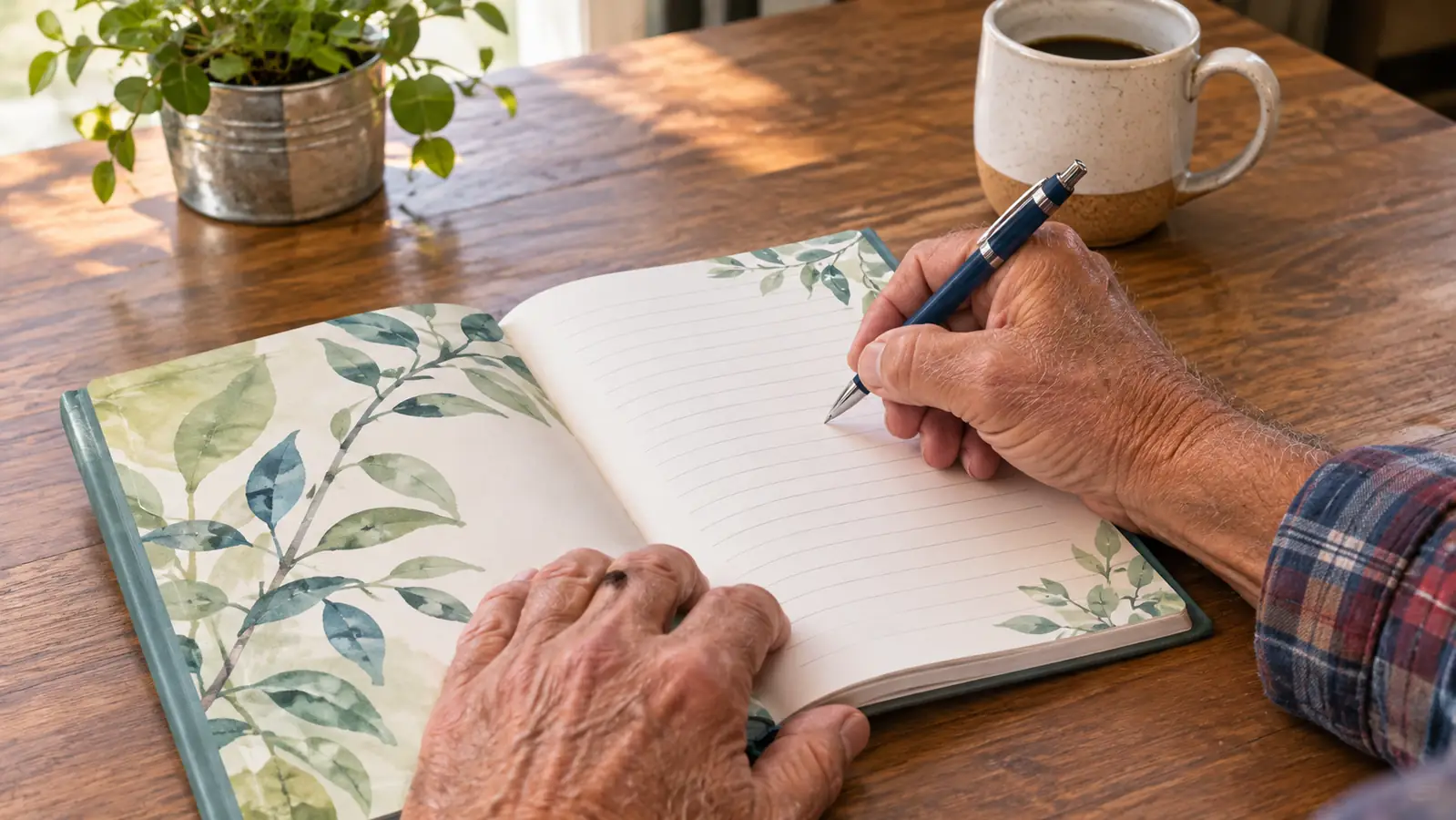
The book has 122 pages. It is published by Questions About Me, and it is part of the Tell Me Your Life Story Series Books. The publication date is April 18, 2021, and it is in English. Those are the plain facts. The useful fact is that the prompts are specific enough to pull a memory out of me without being so narrow that I have nothing to say. I have written about the house I grew up in, the first job I had, the way my mother kept a kitchen, and the year I spent saving for a winter coat. Some prompts I skip. That is allowed.
What I like best is that the book does not ask me to be a writer. It asks me to be a witness. There is a difference. A blank notebook says, “Tell me something interesting.” This journal says, “Tell me about a meal you remember.” I can do that. I can tell you about the Sunday pot roast my mother made in a blue roasting pan, and how the house smelled by noon, and how my father carved it at the table with his sleeves rolled up. That is not a polished essay. It is a memory. My grandson will take the memory.
Questions About Me designed the book to be written in, not admired. The size is manageable for older hands. It is not a heavy coffee-table book. It is the kind of book you can hold on your lap without bracing it against the arm of a chair. I have arthritis in my thumbs, not as bad as Walt's hands, but enough to make some books uncomfortable. This one has not been a problem for twenty minutes at a time. I put it down when my hand tells me to, and I pick it up again the next Sunday.
The prompts are not all the same weight. Some ask for facts: where I was born, what my parents did, what school I attended. Those are easy. Others ask for a scene, and those take longer. I have spent a whole Sunday on one question about a holiday I remember. I wrote two pages and crossed out half of the first. The crossing out is part of it. My grandson will see that I worked at it. He will see that the story mattered enough to get wrong the first time.
“A blank notebook says, ‘Tell me something interesting.’ This journal says, ‘Tell me about a meal you remember.’”
What Months of Use Have Taught Me
The first thing I learned is that the book works best when it is visible. If I put it on a shelf, I forget it. If it stays on the dining table, I write. That sounds obvious, but it is the same reason I keep my reading glasses in the same bowl by the door. The second thing I learned is that my grandson wants the ordinary stories, not the big events. He has heard about weddings and graduations. He has not heard about the summer I worked at a five-and-dime on Prince Street, or the way my father whistled when he was fixing something.
The third thing I learned is that writing by hand slows me down in a useful way. On the iPad, I can delete a sentence before I finish it. In the journal, I cross it out. My grandson will see the cross-outs. He will see that I started a story one way and changed my mind. That is part of the record. I do not want him to inherit a cleaned-up version of me. I want him to inherit the version who could not remember the name of a street and wrote, “the one by the old post office,” and then remembered it two pages later.
I have not missed a Sunday since July, which surprises me more than it will surprise you. I am not a disciplined person about projects. I have a half-finished quilt in the upstairs closet that has been half-finished since 2019. The difference here is that the book is small enough to finish and personal enough to matter. When I close it, I can see the stack of pages I have already written. That stack is the reward. It is not a badge or a certificate. It is a record that did not exist before I sat down.
My grandson has not read the whole book. That is the point. I am not writing it for his approval now. I am writing it for the version of him who will read it when I am not around to explain the parts that do not make sense. That sounds maudlin, and I do not mean it to. It is practical. Every family has a person who remembers the names and the dates. When that person is gone, the names go with her unless someone wrote them down. I am the person in my family. This book is my way of not taking the names with me.
Where It Falls Short
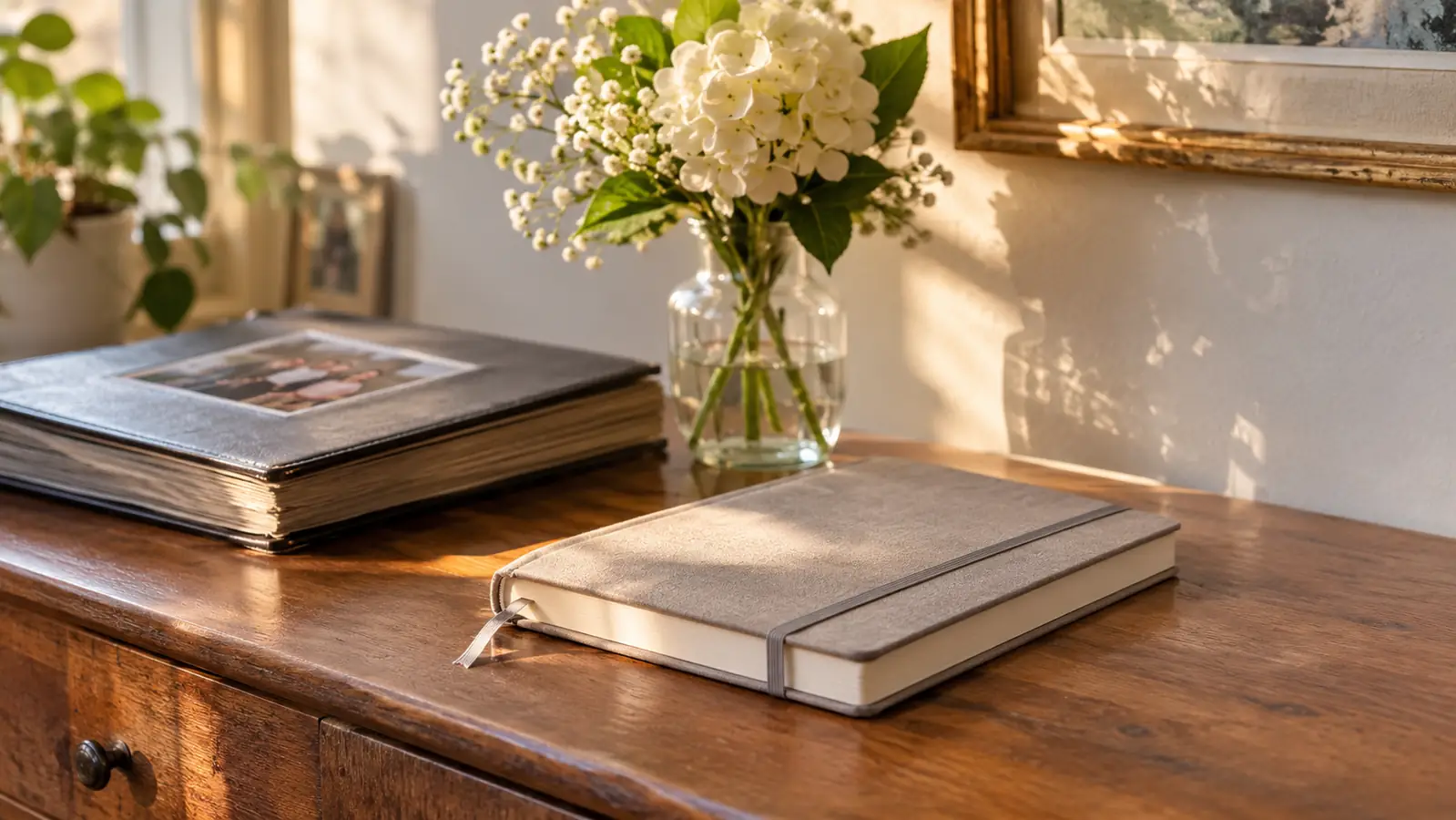
The book is not for everyone. If you are looking for a place to paste photographs, this is not that. There are no pockets, no sleeves, no place to tuck a newspaper clipping. I have a box of old photos in the closet and I keep it separate. If you want a scrapbook, buy a scrapbook. This is a written record. The other limitation is that it is a guided journal, which means you have to answer the prompts. If you hate being asked questions, you will hate this book. If you want a blank page and total freedom, a plain notebook is better.
What I Liked
- Prompts are specific enough to start a memory without turning it into homework
- 122 pages at 7 by 10 inches and 9.1 ounces, light enough for a lap
- No app, no batteries, and no setup beyond finding a pen
- The Sunday habit built itself because the book stayed visible
- A finished book is a readable family record, not a shelf object
Where It Falls Short
- No pockets for photos or clippings
- You have to write by hand, which is slower and can be hard on sore hands
- Some prompts will not fit your life and you will skip them
- It only works if the grandmother actually enjoys writing
I also had to get over the idea that I was doing it wrong. I skipped a prompt about my first car because I could not remember the year, and I skipped one about a family recipe because my mother did not write recipes down. The book does not send a truant officer. You can leave a page blank. That is the only way I have been able to keep going. If I had tried to answer every prompt in order, I would have quit in June. The book is a tool, not an exam, and the sooner you treat it that way the more you will write.
The book has held up to my Sunday use, but it is still a book. If it gets wet, it will show. I keep a coaster under my tea and I keep the journal in the same spot on the table. That is not a defect. It is just a reminder that this is an object, not an app. You cannot back it up. You cannot search it. You can lose it. That is why I keep it in the same place every week and why I would take a photo of each finished page if I were more organized than I am.
Who This Is For
This is for a grandmother who likes to tell stories and a grandchild who wants to keep them. It is also for the adult child who is tired of saying, “We should record Grandma's stories someday.” Someday is a hard date to schedule. A book on the dining table is easier. I think it suits families where the grandchildren are old enough to read a handwritten page without needing it explained. My grandson is 19. He asked for this. A 12-year-old might not. A 30-year-old who has started asking about the family tree would. It also suits a grandmother who has a few stories she has never told because no one asked the right question.
Who Should Skip It
Skip it if the grandmother in your life does not like to write. Do not buy this as a hint. I have seen well-meaning gifts that were really assignments, and they sit in closets. Skip it if you want a photo album, a voice recorder, or a book of blank pages. Skip it if the person has trouble holding a book or writing for more than a few minutes, unless someone in the family is willing to sit and write down the answers for her. The book is a tool, not a test. If it does not fit the person, it will not fit the family.
If you want the stories, give her a place to put them
My grandson asked for the stories, and Questions About Me gave me the pages. The book does not do the writing for you. It is a table, a pen, and a Sunday afternoon. That has been enough.
Amazon View Tell Me Your Life Story, Grandma on Amazon →